Wednesday, February 18, 2026
If you’ve ever looked at your growing duck and thought, “Wait… did I get the wrong gender?” you’re not alone. One of the most common questions we hear is from customers concerned that their female duck suddenly looks like a male, or vice versa. The reality is, many breeds go through an awkward in-between phase where males and females look almost identical. Their adult colors, darker heads, and signature drake curl don’t fully appear until they mature, often between 16 and 20 weeks.
But it’s not just their appearance that changes. Their voices transform right along with them. Ducklings start out with soft, high-pitched peeps, then gradually shift into raspy, uneven teenage quacks before reaching their adult voice. Females develop the classic loud, clear quack, while males settle into a quieter, raspier sound. These voice changes often happen before their adult feathers fully come in, making sound one of the earliest clues to their true gender.
The progression cards below show exactly how each breed develops week by week, including both their feather changes and their evolving voices. By seeing and hearing the full journey, you’ll know exactly what’s normal and what to expect as your duck grows into its adult look and sound.
*To see the full transformation card, zoom out or hold down the photo to save to your deskptop or phone!
But it’s not just their appearance that changes. Their voices transform right along with them. Ducklings start out with soft, high-pitched peeps, then gradually shift into raspy, uneven teenage quacks before reaching their adult voice. Females develop the classic loud, clear quack, while males settle into a quieter, raspier sound. These voice changes often happen before their adult feathers fully come in, making sound one of the earliest clues to their true gender.
The progression cards below show exactly how each breed develops week by week, including both their feather changes and their evolving voices. By seeing and hearing the full journey, you’ll know exactly what’s normal and what to expect as your duck grows into its adult look and sound.
*To see the full transformation card, zoom out or hold down the photo to save to your deskptop or phone!
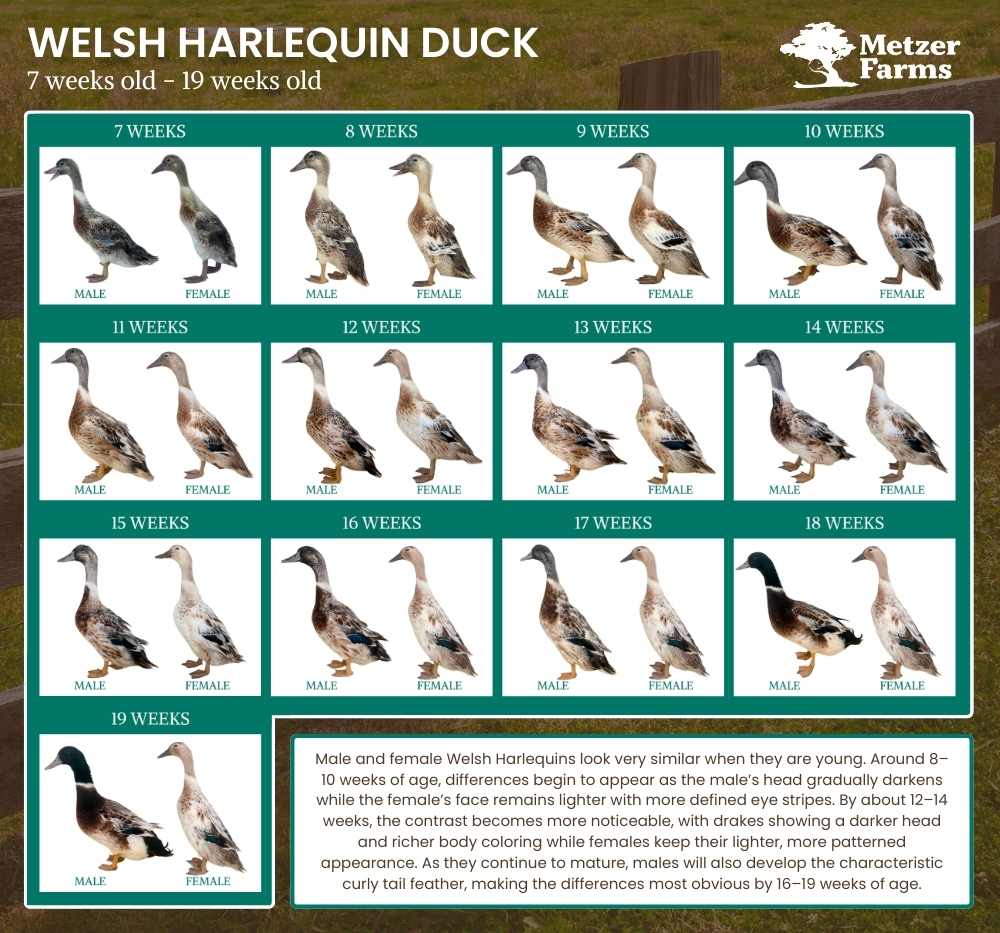
Welsh Harlequin: 7-19 Weeks Old
Male and female Welsh Harlequins look very similar when young. Around 8–10 weeks, the male’s head begins to darken while the female’s face stays lighter with more defined eye stripes. By 12–14 weeks, the contrast becomes clearer, with drakes showing a darker head and richer coloring while females remain lighter and more patterned. As they mature, males also develop the characteristic curly tail feather, making the differences most obvious by 16–19 weeks.
*To see the full transformation card, zoom out or hold down the photo to save to your deskptop or phone!
Voices:
Male:
8 Weeks
9 Weeks
10 Weeks
11 Weeks
12 Weeks
13 Weeks
14 Weeks
15 Weeks
16 Weeks
Female:
8 Weeks
9 Weeks
10 Weeks
11 Weeks
12 Weeks
13 Weeks
14 Weeks
15 Weeks
16 Weeks
Male:
8 Weeks
9 Weeks
10 Weeks
11 Weeks
12 Weeks
13 Weeks
14 Weeks
15 Weeks
16 Weeks
Female:
8 Weeks
9 Weeks
10 Weeks
11 Weeks
12 Weeks
13 Weeks
14 Weeks
15 Weeks
16 Weeks
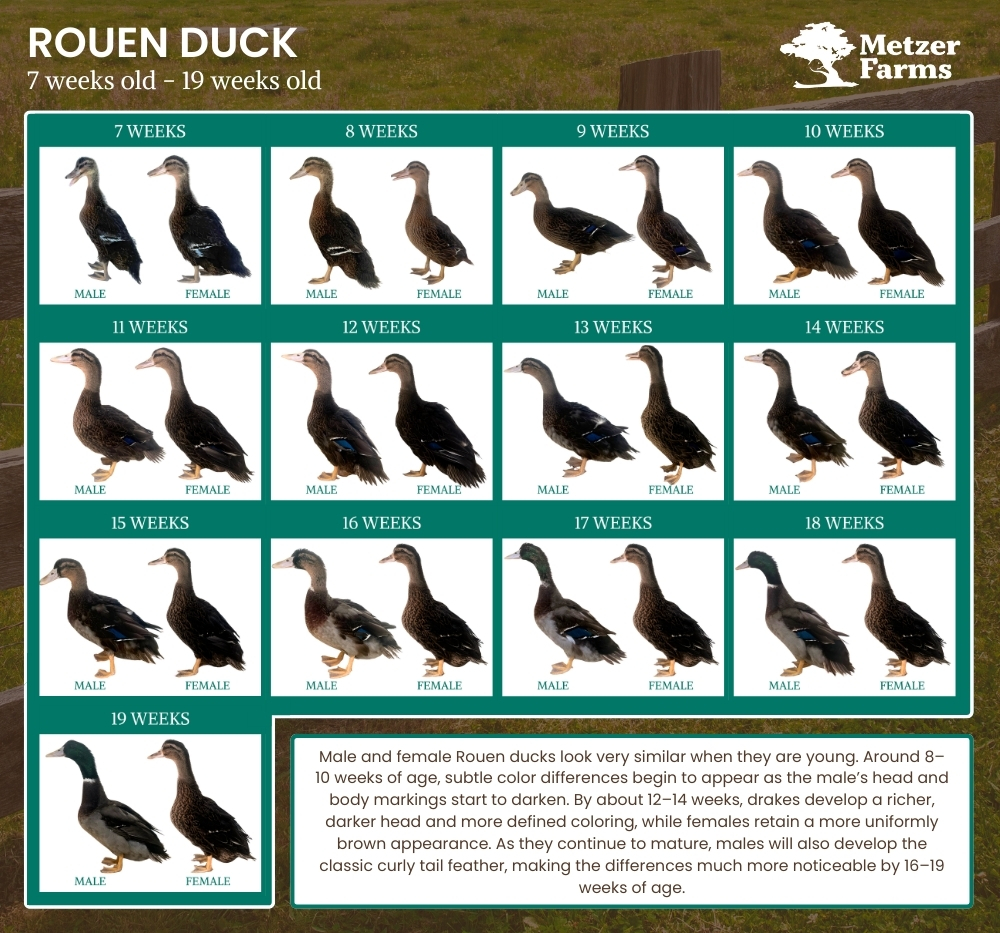
Rouen: 7-19 Weeks Old
Male and female Rouen ducks look very similar when young. Around 8–10 weeks, the male’s head and markings begin to darken. By 12–14 weeks, drakes show a richer, darker head and more defined coloring, while females remain more uniformly brown. As they mature, males also develop the classic curly tail feather, making the differences most obvious by 16–19 weeks.
*To see the full transformation card, zoom out or hold down the photo to save to your deskptop or phone!
Voices:
Male:
8 Weeks
9 Weeks
10 Weeks
11 Weeks
12 Weeks
13 Weeks
14 Weeks
15 Weeks
16 Weeks
Female:
8 Weeks
9 Weeks
10 Weeks
11 Weeks
12 Weeks
13 Weeks
14 Weeks
15 Weeks
16 Weeks
Male:
8 Weeks
9 Weeks
10 Weeks
11 Weeks
12 Weeks
13 Weeks
14 Weeks
15 Weeks
16 Weeks
Female:
8 Weeks
9 Weeks
10 Weeks
11 Weeks
12 Weeks
13 Weeks
14 Weeks
15 Weeks
16 Weeks
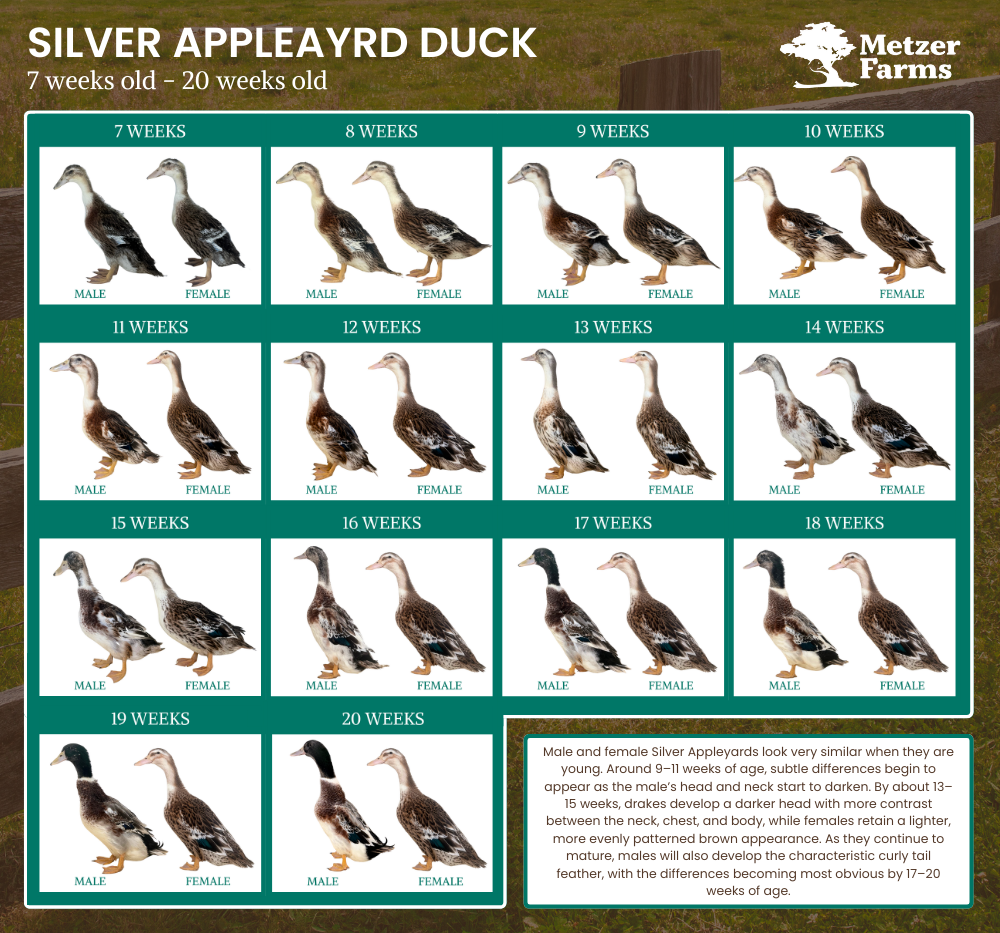
Silver Appleyard: 7-20 Weeks Old
Male and female Silver Appleyards look very similar when young. Around 9–11 weeks, the male’s head and neck begin to darken. By 13–15 weeks, drakes show a darker head and more contrast in their coloring, while females remain lighter and more evenly patterned. As they mature, males also develop the characteristic curly tail feather, making the differences most obvious by 17–20 weeks.
*To see the full transformation card, zoom out or hold down the photo to save to your deskptop or phone!
Voices:
Male:
8 Weeks
9 Weeks
10 Weeks
11 Weeks
12 Weeks
13 Weeks
14 Weeks
15 Weeks
16 Weeks
Female:
8 Weeks
9 Weeks
10 Weeks
11 Weeks
12 Weeks
13 Weeks
14 Weeks
15 Weeks
16 Weeks
Male:
8 Weeks
9 Weeks
10 Weeks
11 Weeks
12 Weeks
13 Weeks
14 Weeks
15 Weeks
16 Weeks
Female:
8 Weeks
9 Weeks
10 Weeks
11 Weeks
12 Weeks
13 Weeks
14 Weeks
15 Weeks
16 Weeks
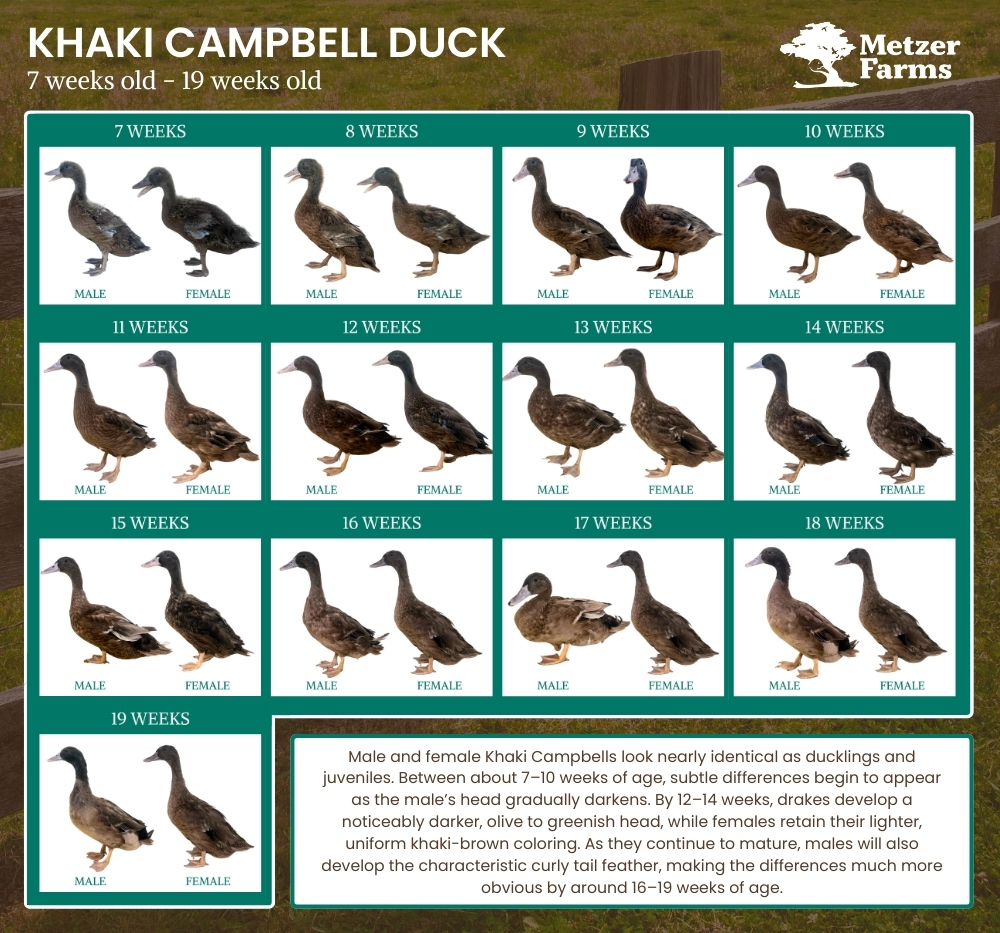
Khaki Campbell: 7-19 Weeks Old
Male and female Khaki Campbells look nearly identical when young. Around 7–10 weeks, the male’s head begins to darken. By 12–14 weeks, drakes develop a darker, olive-green head, while females remain a lighter, uniform khaki-brown. As they mature, males also develop the characteristic curly tail feather, making the differences most obvious by 16–19 weeks.
*To see the full transformation card, zoom out or hold down the photo to save to your deskptop or phone!
Voices:
Male:
8 Weeks
9 Weeks
10 Weeks
11 Weeks
12 Weeks
13 Weeks
14 Weeks
15 Weeks
16 Weeks
Female:
8 Weeks
9 Weeks
10 Weeks
11 Weeks
12 Weeks
13 Weeks
14 Weeks
15 Weeks
16 Weeks
Male:
8 Weeks
9 Weeks
10 Weeks
11 Weeks
12 Weeks
13 Weeks
14 Weeks
15 Weeks
16 Weeks
Female:
8 Weeks
9 Weeks
10 Weeks
11 Weeks
12 Weeks
13 Weeks
14 Weeks
15 Weeks
16 Weeks
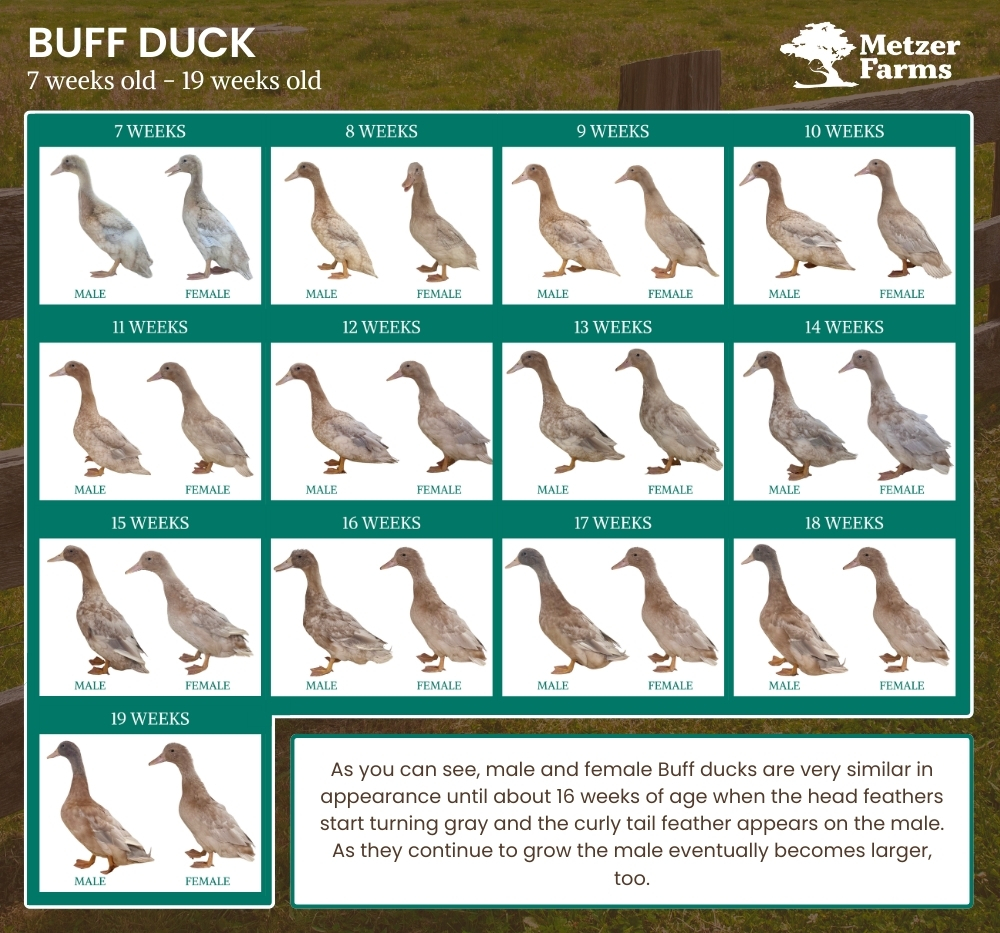
Buff: 7-19 Weeks Old
Male and female Buff ducks look very similar when young. Around 14–16 weeks, the male’s head begins to turn a darker gray while females remain a lighter buff color. As they mature, males also develop the characteristic curly tail feather and become slightly larger, making the differences most obvious by 17–19 weeks.
*To see the full transformation card, zoom out or hold down the photo to save to your deskptop or phone!
Voices:
Male:
8 Weeks
9 Weeks
10 Weeks
11 Weeks
12 Weeks
13 Weeks
14 Weeks
15 Weeks
16 Weeks
Female:
8 Weeks
9 Weeks
10 Weeks
11 Weeks
12 Weeks
13 Weeks
14 Weeks
15 Weeks
16 Weeks
Male:
8 Weeks
9 Weeks
10 Weeks
11 Weeks
12 Weeks
13 Weeks
14 Weeks
15 Weeks
16 Weeks
Female:
8 Weeks
9 Weeks
10 Weeks
11 Weeks
12 Weeks
13 Weeks
14 Weeks
15 Weeks
16 Weeks
Comments
Absolutely fantastic post! Shared to lots of duck groups. We always see the same questions all of the time!
Catherine, Monday, March 9, 2026
THAT WAS VERY INTERESTING, THANK YOU
DOLOROUS MANTZ, Thursday, March 12, 2026
Thank you
Karen, Thursday, March 12, 2026
Can you do this for Muscovy ducks?
Jackie, Saturday, May 23, 2026
Thank you..I think I have a male and female, but that's only a guess
Can you do this with Pekin Ducks, Wednesday, June 17, 2026
please do this for the Pekins too.
wendy browne, Thursday, August 6, 2026