Monday, September 1, 2025
Thinking about raising ducks, but planning to wait until spring? What many new duck keepers may not realize is that fall is actually one of the best seasons to start a flock! Raising ducks in fall comes with a number of advantages that make the process easier and more rewarding. Cooler temperatures during the fall months make brooding ducklings safer and more comfortable, reducing the risk of overheating and stress. There are also fewer pests and insects around, which helps keep brooders and pens cleaner and healthier. By starting your flock in the fall, your ducks will reach laying age just as spring arrives, giving you fresh backyard eggs right when your garden is blooming. Fall ducklings also provide more opportunities to bond with your birds during their early weeks, which can result in friendlier, more social ducks as they grow.
At Metzer Farms, we hatch and ship healthy and happy ducklings year-round across the United States. This means you do not have to wait until spring to begin your duck journey. Whether you are starting a new flock from scratch or adding to an existing group of backyard ducks, fall is an ideal time to bring home ducklings, watch them grow, and prepare for a productive spring season. Following proper duck care tips for fall will ensure your flock stays happy, active, and healthy throughout the cooler months.
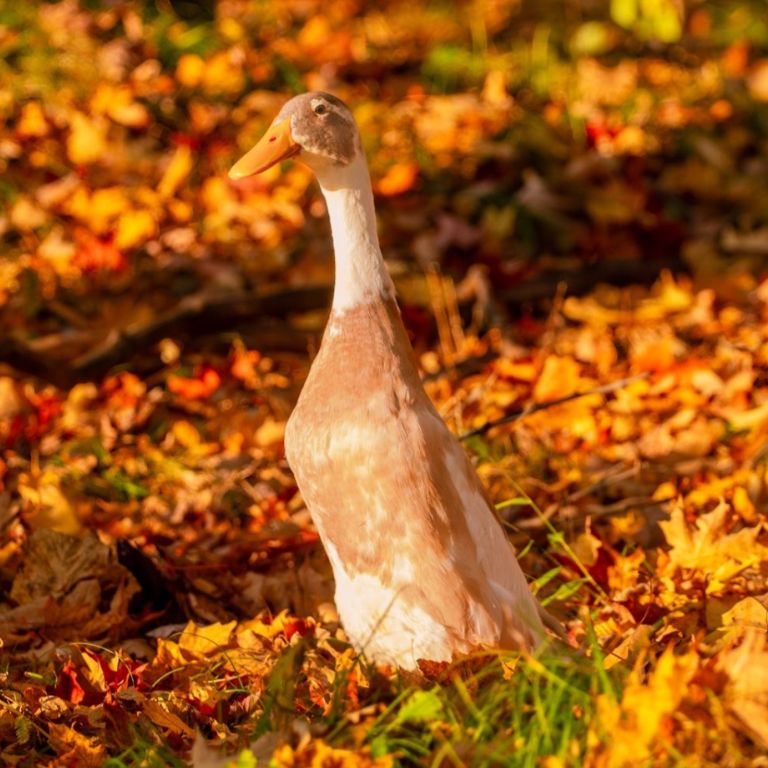
Fresh Eggs by Spring
When it comes to raising ducks for eggs, the time of year you start your ducklings makes a big difference. Ducklings hatched in the fall grow up through the winter months and reach laying age just as spring arrives. Since spring brings longer days and warmer weather, ideal conditions for egg production, your fall-raised ducks will reward you with plenty of eggs right when the season is at its best. Spring ducklings, on the other hand, can be less efficient. Many won’t start laying until the following spring, meaning you’ve spent extra months feeding them without getting any eggs. Others may begin laying in the fall or winter, but that’s not an ideal time to start. Shorter days and cold temperatures naturally slow down egg production, so you won’t see the same strong results. Ducks are very seasonal layers, and their egg production is closely tied to daylight hours. Short days mean fewer eggs, while longer days encourage steady laying. That’s why fall ducklings are the smart choice: they reach maturity right as the days get longer, setting you up for an abundance of fresh eggs in the spring.
Cooler Weather Makes Brooding Easier
Raising ducklings in the summer heat can be challenging. Fall temperatures make brooding more comfortable for both you and your ducks. There is less risk of overheating, and your ducklings can grow strong and healthy without the stress of hot summer days.
Fewer Pests and Cleaner Brooders
Flies, mites, and other insects are less active in cooler weather. Fall ducklings enjoy a cleaner brooder and fewer pest problems. This creates a healthier environment and reduces stress on your young birds.
More Time to Bond With Your Ducks
Raising ducklings in the fall gives you extra opportunities to spend time with your birds depending on where you live! Children go back to school, the weather isn’t scorching hot, and life moves a little slower, which means more time and attention can go towards bonding with your ducks. Early handling and interaction help build trust, resulting in friendlier, more social ducks that are easier to manage as they grow.
Ducklings Available Year-Round
Metzer Farms hatches and ships ducklings every week of the year. You do not need to wait until spring to start your flock. Whether you are adding to an existing flock or beginning your first group of ducks, fall is a perfect time to bring home healthy, happy ducklings.
Once your ducks are fully feathered and ready for the world, there are a few tips to focus on during the fall weather:
Provide plenty of clean water. Ducks need access to fresh water at all times.
Shelter your ducks properly. Ducks tolerate cooler weather well, but they need a draft-free coop with plenty of dry bedding for protection and comfort.
Adjust their feed. Consider feed with slightly higher protein or energy to support molting and maintain activity as temperatures drop.
Encourage foraging and enrichment. Ducks enjoy exploring for bugs, greens, and seeds, which supports nutrition and mental stimulation.
Monitor your flock closely. Watch for signs of molting or seasonal stress, and make small adjustments as needed. Ducks may drop lots of feathers, look patchy, and slow down egg laying as they molt, sometimes seeming more tired or moody. This is very normal during a molt. Seasonal stress can also show up as bigger appetites, resting more often, or looking a bit thinner if they need extra nutrition. Give them a little extra protein for feather growth, make sure they have plenty of clean water and space to forage, and be patient with lighter egg production until their molt is done. Our VitaMetz Waterfowl Boost is a great addition to help your flock grow healthier, ensuring better feather quality, strong legs, and a more vibrant appearance! Adding wind protection, dry bedding, and healthy treats like peas or mealworms can also ease seasonal stress.
By following these simple steps, your ducks will stay healthy, active, and happy throughout the cooler months.
Fall is one of the best-kept secrets in the duck world. You will enjoy easier brooding, fewer pests, more bonding time, and fresh eggs by spring. Whether you are starting your first flock or expanding an existing group of backyard ducks, there is no need to wait until spring. Metzer Farms ships ducklings nationwide every week of the year, so you can start your duck adventure today.